If you’re working hard on your summer herb garden, don’t forget to plant some dill seeds. Dill is one of the easiest plants to grow, and pollinators love it, making it a great addition to any garden (even if the flavor isn’t your favorite!). The steps on how to grow and harvest dill are thankfully fairly simple, but it’s always beneficial to have some expert guidance.
Below, we walk through the steps of how to grow dill, including how to harvest it and the sunlight, water, and other basics it needs to thrive.
Additional copy by Meghan Shouse.
Dill Plant Basics

Dill is a cool-season annual herb that readily self-sows in garden beds. Once you plant it and allow it to go to seed, it will drop enough to pop up again next spring on its own. Dill prefers cooler temperatures, so by midsummer, it may “bolt” or go to seed, though there are some varieties that are more heat-tolerant. Regardless, you can dry the seeds to use in culinary dishes, let them drop to reseed, or save them to plant next year.
Just like other members of the carrot family, such as parsley, dill is also a host plant for the larvae (caterpillars) of the swallowtail butterfly. The caterpillars will munch away, then go elsewhere to pupate. So, plant a few extra dill plants to support your local beneficial pollinator populations.
How to Grow Dill
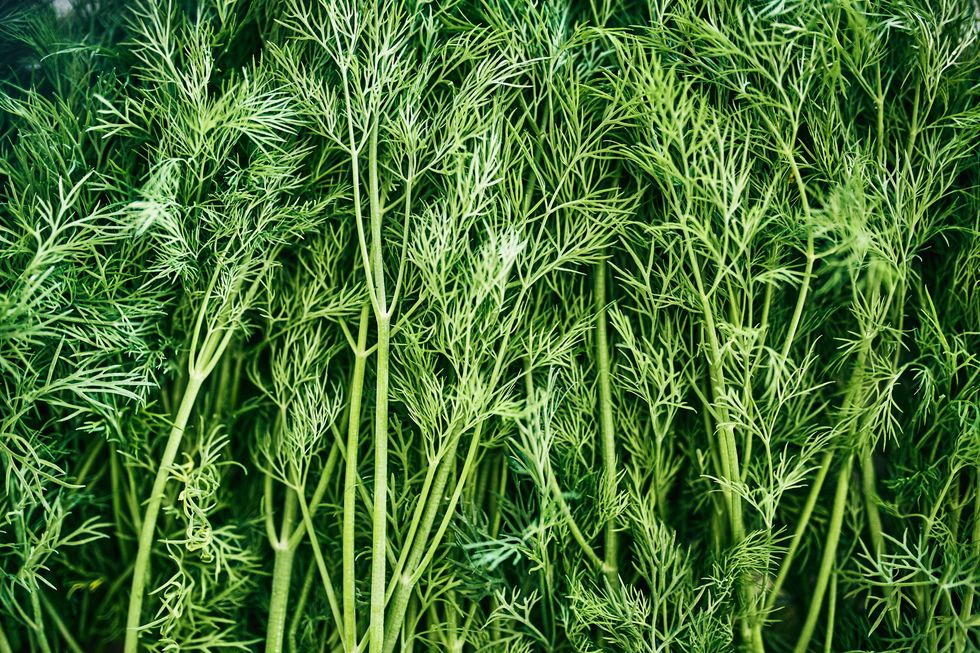
It's best to grow dill from seed because the plant has a long taproot that makes it fussy about being transplanted as a seedling. Dill grows equally well in either a bed or a container; in either spot, sow seeds about ¼-inch deep in late fall or early spring, when temperatures are cool. Seeds germinate in about 10 to 14 days.
You can also succession plant dill, seeding every few weeks to keep a supply coming for most of the growing season. Thin seedlings when they’re about two inches tall to about a foot apart so that they have ample space between them, because most dill plants can grow two or more feet wide.
Sunlight
Dill needs full sun in order to thrive, which is considered six or more hours of direct sunlight per day. However, in hotter climates, it prefers part shade in the afternoon.
Water
Dill prefers soil that's slightly moist. Water your plant regularly, which will help keep it from bolting, or going to seed. Don’t let it get totally dry, or it can wilt and have a hard time recovering.
Soil Type
Dill does well in a variety of soil types, but will thrive best in well-drained, slightly acidic soil. If you have heavy clay, which can stay too wet, plant your dill in containers.
Fertilizer
Like most herbs, dill is not a heavy feeder. Apply a balanced all-purpose fertilizer at planting time.
Common Diseases and Pest Issues
Dill is relatively resistant to pests, but you may occasionally encounter aphids or spider mites. To address, blast them off with a spray from the garden hose; you’ll need to hit the underside of plants and stems, and repeat every few days to keep down the population. Powdery mildew may occur if it’s humid, so reduce the risk by maintaining adequate spacing between plants for good air circulation.
How to Harvest Dill

Dill tastes best when it starts to flower, so harvest it as soon as you see buds forming. You can also prune it throughout the season to promote bushy growth. Use scissors to snip off outer stems where they emerge from the soil. Use immediately, or store the cuttings in a jar of water, with the foliage wrapped in a damp paper towel for longer storage.
Don’t cut back more than a third of the plant at a time. If you allow it to go to full flower, you will shorten the harvest window for foliage, but you will gain the seeds, which can also be harvested. You'll know they're ready for use when they’re golden-brown.
Types of Dill
- ‘Fernleaf’ is a dwarf variety that branches from the base of the plant. It works well in containers and will grow to be about 18 inches tall.
- ‘Hera’ has fine blue-green foliage and is slow to bolt in the heat. Growth reaches about 24 inches tall.
- ‘Mammoth’ is a popular variety with excellent flavor that does well in hot climates. It can reach 36 inches tall.
- ‘Dukat’ has a more intense dill flavor and will grow to 36 inches tall.
Is Dill Toxic to Pets?
According to the ASPCA, dill is not toxic to pets. However, when ingested in large enough quantities, any plant matter can cause GI upset, so call your vet if you suspect your pet has eaten your dill plants. It’s always better to be safe than sorry.